
Christmas Decor Trends 2026: Colors, Characters and Display Ideas
Christmas Decor Trends 2026: Colors, Characters and Display Ideas
Christmas decorating in 2026 is not about abandoning tradition. It is about making familiar holiday symbols feel more personal, collectible and visually distinctive. Snowmen, Santa, winter villages and Christmas trees remain instantly recognizable, but shoppers are responding to updated colors, nostalgic details, dimensional scenes and decorative effects that create a stronger display.
What is shaping Christmas decor in 2026?
The strongest Christmas collections combine two qualities that can seem contradictory: emotional familiarity and visual freshness. Shoppers want decorations that immediately feel like Christmas, yet they also want a reason to choose one item over the many similar products already available.
Current trade reporting supports this direction. The Christmasworld 2026 decor forecast highlights nature, emotional atmosphere and imaginative presentation, while broader holiday analysis points to shoppers seeking classic themes with modern updates.
For retailers, this means trend relevance does not require a completely unfamiliar product. A proven snowman, church or carriage can become more distinctive through its color story, surface treatment, internal scene, light temperature, movement or packaging.
This article focuses specifically on Christmas. For a broader view across Halloween, fall and year-round occasions, read our Seasonal Decor Trends 2026 guide.
1. Modern nostalgia brings familiar Christmas characters back
Nostalgia remains one of the clearest directions in Christmas decorating. Familiar imagery offers comfort and instant recognition, particularly when it recalls childhood ornaments, animated shop windows or decorations brought out every December.
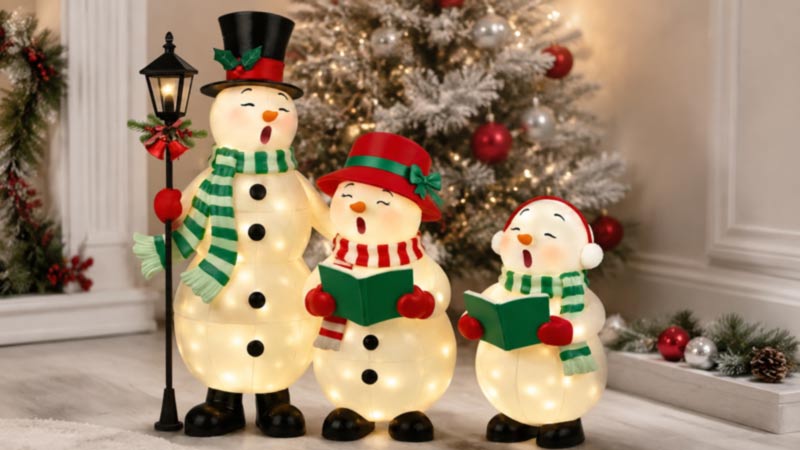
Snowmen are especially versatile because they work across traditional, whimsical and contemporary collections. A classic snowman with a top hat and scarf can feel playful in bright red and green, refined in clear crystal and silver, or modern in white with cool illumination. Santa, nutcrackers, toy shops, churches and winter villages offer similar flexibility.
The return of late-twentieth-century Christmas styling also shows how nostalgia can evolve. Reporting on the rise of the “90s Christmas” aesthetic describes renewed interest in multicolored lights, handmade-looking ornaments and familiar holiday-film warmth. The lesson for product development is not to copy one decade literally, but to preserve the emotional cues shoppers associate with Christmas traditions.
How to make nostalgic decor feel current
- Use one recognizable central character rather than several unrelated motifs.
- Update the palette while keeping the silhouette familiar.
- Add miniature scene details that reward close viewing.
- Coordinate several designs through a shared base, finish or illustration style.
- Use packaging photography that shows the product illuminated and unlit.
2. Christmas color trends move beyond standard red and green
Traditional red, green and gold remain commercially important, particularly in classic retail programs. However, 2026 collections can gain distinction by treating color as a clear design direction rather than applying the same palette to every product.
Icy blue, silver and crystal white
Cool winter palettes are well suited to snowmen, crystal trees, snowflakes and frozen woodland scenes. The Pinterest Predicts 2026 report identifies Cool Blue as a growing cross-category aesthetic, supported by interest in icy blue and glacier-inspired visuals. In Christmas decor, the direction can be expressed through cool white LEDs, transparent materials, silver accents and iridescent glitter.
Heritage red, forest green and deep navy
A darker heritage palette gives traditional Christmas decor a more collected, premium appearance. Burgundy, forest green, navy, tartan-inspired pattern and antique metallic details can evoke vintage holiday interiors without making the product feel old-fashioned.
Warm neutrals and natural finishes
Cream, taupe, pale wood, soft gold and muted greenery suit retailers that prefer a quieter holiday assortment. These colors allow character details and illuminated scenes to remain visible while fitting naturally into neutral home interiors.
Pastels and playful accents
Soft pink, mint, lavender and candy-inspired colors work best when attached to a specific story, such as a sweet shop, toy shop or whimsical tree. Used selectively, they provide an alternative to conventional Christmas color without losing seasonal recognition.
3. Small Christmas scenes create collectible appeal
A decoration becomes more memorable when it contains a complete visual moment. A snowman standing alone is recognizable; a snowman surrounded by frosted trees, gifts and suspended snow tells a story. A church gains emotional depth when paired with a winter path, miniature figures or a softly illuminated interior.
This scene-based approach is particularly effective for decorative water lanterns. Their transparent bodies provide space for layered characters and backgrounds, while swirling glitter introduces movement without requiring the shopper to handle the item.
Collections can be organized around several repeatable story types:
- Winter village: churches, houses, bridges and snow-covered streets.
- Character Christmas: snowmen, Santa, penguins and woodland animals.
- Celebration scenes: carriages, couples, gifts and decorated trees.
- Food and drink: hot cocoa, candy shops and festive market stalls.
- Musical Christmas: pianos, instruments and performance-inspired scenes.
Explore our Christmas Water Lanterns for examples of snowmen, churches, trees and illuminated winter scenes.
4. Light and movement make shelf displays more engaging
Christmas decor often competes for attention in a visually dense retail environment. Controlled light and movement can help a product stand out, but the effect must support the design rather than overwhelm it.
Choose LED color according to the scene
Not every Christmas product needs warm light. Cool white LEDs can strengthen icy, crystal and silver designs. Warm white or amber light can make churches, village scenes and antique-style lanterns feel more intimate. Some products may benefit from neutral white illumination that keeps the scene’s original colors accurate.
Use glitter as part of the visual story
Fine silver glitter suggests snow, while iridescent particles create a more magical or contemporary effect. Gold glitter can reinforce warm traditional scenes. Particle size, density and circulation speed should be tested so the figure remains visible while the product is operating.
Add functions selectively
Music, rotation and timers can increase perceived value, but adding every available function is not always the best choice. A refined decorative piece may need only light and swirling glitter. A carousel, train or musical scene may justify rotation and sound because those features belong naturally to the story.
5. Vintage luxury adds depth to Christmas collections
Alongside playful nostalgia, 2026 also supports a richer holiday direction influenced by vintage interiors and theatrical celebration. Velvet-like colors, antique silver, aged brass, jewel tones and decorative architectural shapes can produce a more premium appearance.
Pinterest’s Neo Deco and Opera Aesthetic forecasts reflect renewed interest in geometry, metallic detailing, dramatic color and stage-like atmosphere. Applied carefully, these influences can update Christmas carriages, churches, lantern bodies and display bases.
The most effective designs avoid excessive ornament. One strong frame shape, a controlled metallic finish and a focused interior scene usually look more premium than several competing decorative treatments.
6. Christmas retail displays should communicate quickly
A successful display helps shoppers understand the product within seconds: what theme it represents, what it does and where it could be used. This is especially important for illuminated or animated decorations whose effect may not be obvious from packaging alone.
Create a clear visual hierarchy
Use one hero product at eye level, then support it with smaller related designs. Repetition of color, base finish or character style makes the display feel intentional rather than crowded.
Demonstrate movement without visual noise
If every item operates continuously, glitter, music and rotating elements can compete with one another. Retailers can demonstrate selected products while using photography, icons or short feature descriptions to explain the rest of the assortment.
Merchandise across decor and gifting
Decorative products with finished presentation can work in both seasonal home and gift departments. The National Retail Federation’s winter holiday research continues to track gifts, decorations and other seasonal purchases as major components of holiday spending. This makes display-ready decorative gifts particularly useful for retailers serving several customer needs.
How to turn a Christmas trend into a market-ready product
Trend references are most useful when they lead to a focused product brief. Before selecting a shape or function, define the intended retailer, target price, customer style and display environment.
- Select the theme: winter village, character Christmas, heritage holiday, crystal winter or playful gifting.
- Choose the hero element: snowman, Santa, church, tree, carriage or another recognizable focal point.
- Set the palette: traditional, icy, neutral, heritage or playful.
- Match the functions: LED color, glitter movement, music, rotation and timer options.
- Develop the packaging: protect the product, show its operating effect and communicate key features clearly.
SYL Crafts supports Christmas water lantern development from existing designs or new concepts, including scene, color, function, branding and retail packaging customization. Flexible MOQ starts from 100 pieces, depending on product structure, customization and packaging requirements.
View the complete Water Lantern collection and identify the product format that best suits your local Christmas market.
Frequently Asked Questions
What are the main Christmas decor trends for 2026?
Major directions include modern nostalgia, icy blue and silver palettes, heritage colors, collectible character scenes, vintage metallic finishes and illuminated decorations with controlled movement.
What Christmas colors are popular in 2026?
Traditional red, green and gold remain important, while icy blue, silver, crystal white, deep navy, burgundy, warm neutrals and selected pastel accents provide more differentiated alternatives.
Are snowmen still popular Christmas decorations?
Yes. Snowmen remain highly recognizable and can work across playful, traditional and contemporary collections. Their appearance can be updated through material, color, lighting and scene design.
Should a Christmas water lantern use warm or cool light?
The light should match the scene. Cool white suits crystal, snow and silver designs; warm white or amber works well for churches, villages and antique-style products. Neutral light is useful when accurate scene color is important.
Can Christmas water lanterns be customized for retailers?
Yes. Product shape, internal scene, characters, color, glitter, LED temperature, music, rotation, branding and packaging can be adapted to a retailer’s market and price requirements.