
Halloween Animatronics Manufacturer: OEM & ODM Buying Guide
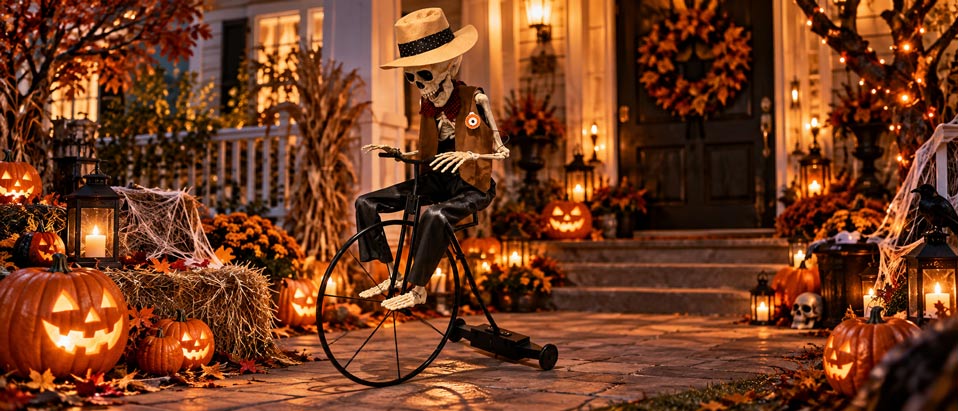
Halloween Animatronics Manufacturer
Halloween animatronics have become an important category for retailers looking to create more immersive and interactive seasonal collections. Unlike static decorations, animated Halloween products can combine movement, sound, lighting, sensors, and character design to create an immediate visual experience.
For retailers, importers, distributors, and private-label brands, choosing the right Halloween animatronics manufacturer involves much more than comparing product appearance and price. Motors, mechanical structures, electronics, sensors, materials, packaging, testing, and production consistency can all affect the performance of the final product.
This guide explains how professional buyers can source and develop Halloween animatronics for retail, including popular product categories, animation functions, OEM/ODM development, quality control, packaging, and supplier evaluation.
What Are Halloween Animatronics?
Halloween animatronics are decorative characters or props that use mechanical and electronic components to create movement or interactive effects.
Depending on the product, an animatronic decoration may include:
- Moving heads
- Moving arms and hands
- Opening mouths
- Moving wings
- Shaking or vibrating bodies
- Rotating components
- LED lighting
- Glowing eyes
- Sound effects
- Music
- Motion sensors
- Touch or vibration activation
These functions can be used individually or combined to create more complex Halloween experiences.
Why Are Animated Halloween Decorations Popular?
Halloween is particularly suited to animated products because movement and surprise are naturally connected with the holiday.
A skeleton that suddenly turns its head, a witch that begins speaking when someone approaches, or a pumpkin character that shakes and lights up creates a different experience from a static decoration.
This gives animatronics several advantages for retailers.
Strong Visual Impact
Movement attracts attention in stores, window displays, trade shows, and online advertising.
Easy Product Demonstration
Animated products are well suited to short-form video. A few seconds of movement, sound, or sensor activation can immediately demonstrate the product’s main selling point.
Higher Product Differentiation
Character design, animation, sound, lighting, and activation methods can be combined in many ways, giving retailers more opportunities to develop exclusive products.
Multiple Price Points
Halloween animatronics do not have to be extremely large or expensive. Collections can range from small animated tabletop products to large electronic characters for outdoor and commercial displays.
Popular Halloween Animatronic Product Categories
A professional Halloween collection can include multiple character types, sizes, and functions.
Animated Skeletons
Skeletons are one of the most adaptable Halloween characters. Designs can include standing skeletons, seated characters, skeleton musicians, skeleton animals, talking skeletons, and large animated figures.
Movement can be added to the head, jaw, arms, torso, or entire body depending on the product structure.
Animated Witches
Witches can combine fabric costumes, sculpted heads and hands, internal frames, sound modules, LEDs, and mechanical movement.
Common effects include moving heads, moving arms, talking, laughing, glowing eyes, and motion activation.
Animated Ghosts and Grim Reapers
Ghosts and grim reapers work particularly well with lightweight fabric, internal lighting, moving structures, and sound effects.
The combination of dark environments, illuminated faces, fabric movement, and unexpected activation can create strong visual impact without requiring an overly complicated mechanical system.
Animated Pumpkins
Pumpkin characters can range from small vibrating products to large animated figures.
Functions may include glowing eyes, illuminated mouths, shaking bodies, moving heads, sound effects, and sensor activation.
Animated Halloween Animals
Halloween animals allow retailers to expand beyond traditional human characters.
Popular concepts can include:
- Skeleton cats
- Skeleton dogs
- Ravens
- Owls
- Spiders
- Bats
- Rats
- Fantasy creatures
These products can be sold individually or combined with larger characters to create complete Halloween scenes.
Animated Trees and Large Characters
Haunted trees, monsters, pharaohs, large skeletons, and other oversized characters can serve as hero products within a Halloween assortment.
Large products can deliver strong visual impact, but they also require additional attention to structural stability, mechanical design, assembly, packaging, and transportation.
Motion-Activated Halloween Animatronics
One of the most useful functions in modern Halloween animatronics is motion activation.
Instead of continuously repeating an animation, the product remains inactive until someone approaches the sensor.
Once triggered, the product may:
- Move its head or arms
- Open its mouth
- Shake or vibrate
- Illuminate its eyes
- Play a sound effect
- Speak a phrase
- Activate several effects simultaneously
This creates an element of surprise while reducing unnecessary continuous operation.
For additional sourcing information, visit our Motion Activated Halloween Decorations Wholesale guide.
How Halloween Animatronics Are Developed
A successful animated product starts with the character concept, but the visual design and mechanical design need to develop together.
A typical OEM/ODM development process may include the following stages.
1. Product Concept
The buyer and manufacturer define the character, approximate dimensions, target retail price, intended market, animation, sound, lighting, activation method, and packaging requirements.
2. Appearance Design
The character’s proportions, expression, costume, colors, surface details, and overall style are developed.
This stage is particularly important for private-label collections because visual differentiation can help prevent the final assortment from looking identical to competing products.
3. Mechanical Structure Development
The internal structure determines how the character moves.
Engineers may need to consider motors, gears, linkages, rotating shafts, frames, movement range, operating speed, balance, and mechanical resistance.
4. Electronics Development
Depending on the design, electronics may include LEDs, speakers, control boards, sensors, switches, battery compartments, adapters, and wiring.
5. Prototype Testing
A functional prototype allows the buyer and manufacturer to evaluate both appearance and performance.
Questions during this stage may include:
- Does the movement look natural?
- Is the animation fast enough?
- Is the motor too noisy?
- Is the sound volume appropriate?
- Does the sensor trigger reliably?
- Are the LEDs positioned correctly?
- Is the character stable during operation?
6. Packaging Development
Packaging needs to protect the mechanical and decorative components while keeping carton dimensions under control.
7. Pre-Production Approval
Before mass production, the final product specifications, functions, colors, materials, packaging, and workmanship standards should be confirmed.
Movement Quality Matters
Adding a motor does not automatically create a good animatronic product.
The quality of the movement is just as important as whether the product moves at all.
For example, a character’s head may technically rotate, but if the movement is too fast, too slow, too noisy, or mechanically unnatural, the final product can feel inexpensive.
Buyers should evaluate:
- Movement speed
- Movement range
- Smoothness
- Mechanical noise
- Repeated-cycle reliability
- Interaction between multiple moving parts
For some products, a simple movement executed well can create a better consumer experience than several complicated movements with poor coordination.
Sound and Lighting Should Support the Character
Sound and lighting are important components of Halloween animatronics, but more effects do not always create a better product.
A grim reaper may benefit from slow movement, subtle red eyes, and a low voice, while a jump-scare pumpkin may require faster vibration, brighter eyes, and a sudden sound effect.
The function should support the personality of the character.
OEM/ODM development can allow buyers to customize sound files, LED colors, activation sequences, movement timing, and other effects depending on the project.
Choosing the Right Power Source
Halloween animatronics may use batteries, external adapters, USB power, or other electrical configurations depending on product size and function.
Battery-powered products can provide flexible placement, while larger products with more demanding motors, speakers, or lighting may require another power solution.
Professional buyers should define the intended market early because electrical requirements can vary between countries and retail programs.
Quality Control for Halloween Animatronics
Quality control is especially important for animated products because they contain more components than static decorations.
A complete inspection program may evaluate:
- Product appearance
- Assembly quality
- Motor operation
- Movement consistency
- Sensor activation
- Sound function
- LED function
- Switch operation
- Battery compartment
- Adapter and wiring
- Product stability
- Packaging protection
Repeated functional testing can also help identify mechanical problems that may not appear during a single activation.
Packaging Animated Halloween Products
Packaging can be challenging for Halloween animatronics because products may contain fragile decorative components, mechanical structures, electronics, and irregular shapes.
The packaging needs to balance several objectives:
- Protect the product
- Prevent movement inside the carton
- Protect electronic and mechanical components
- Reduce unnecessary carton volume
- Support warehouse handling
- Make consumer assembly understandable
For large characters, detachable components or folding structures may help reduce shipping volume when they can be engineered without compromising product quality.
Halloween Animatronics for E-Commerce
E-commerce creates additional requirements for animated Halloween products.
The product needs to survive parcel shipping, but it also needs to be easy to understand online.
Retailers should consider providing:
- Clear product dimensions
- Multiple product images
- Animation videos
- Sensor demonstrations
- Sound demonstrations
- Assembly instructions
- Power information
- Indoor or outdoor use information
Video is particularly valuable because movement is difficult to communicate through a single static product image.
Custom Halloween Animatronics for Retailers
OEM/ODM development gives retailers and brands more control over the final product.
Customization can include:
- Original character designs
- Exclusive sculpting
- Custom dimensions
- Custom fabrics and costumes
- Custom colors
- Custom movement
- Custom sound
- Custom LED effects
- Motion sensors
- Custom packaging
- Private-label branding
This allows buyers to develop products around a specific retail concept rather than selecting only from existing catalog items.
Learn more about our Seasonal Product Development and OEM/ODM services.
How to Choose a Halloween Animatronics Manufacturer
When comparing suppliers, buyers should evaluate more than the quotation.
Important questions include:
- Does the manufacturer have experience with animated seasonal products?
- Can the supplier develop mechanical structures?
- Can movement, lighting, sound, and sensors be customized?
- How are prototypes developed and approved?
- How are motors and electronic functions tested?
- Can packaging be developed together with the product?
- Can the supplier support relevant testing and compliance requirements?
- How is quality controlled during mass production?
- Can the supplier support large retail programs?
A lower unit price can become expensive if mechanical failures, packaging damage, inconsistent production, or delayed delivery create problems later in the supply chain.
For a broader sourcing overview, read our Halloween Decorations Manufacturer Guide.
Why Work with SYL Crafts?
SYL Crafts develops and manufactures seasonal decorations for retailers, importers, distributors, brands, and e-commerce businesses.
Our Halloween capabilities include animated witches, skeletons, ghosts, pumpkins, skeleton animals, owls, ravens, haunted trees, large electronic characters, motion-activated props, resin figurines, fabric decorations, blow-molded products, and other custom seasonal projects.
Our development capabilities can support product concepts, appearance design, mechanical functions, electronics, prototyping, packaging, quality control, and bulk manufacturing.
Buyers can also explore our Animated Halloween Decorations Wholesale guide for additional product ideas.
Frequently Asked Questions
What is a Halloween animatronic?
A Halloween animatronic is a seasonal decorative product that uses mechanical or electronic components to create movement or interactive effects. Products may also include sound, lighting, motion sensors, and other functions.
Can Halloween animatronics be customized?
Yes. Depending on the project, customization can include character design, dimensions, materials, costumes, movement, sound, lighting, sensors, packaging, and private-label branding.
What types of Halloween animatronics can be manufactured?
Common products include animated skeletons, witches, ghosts, grim reapers, pumpkins, haunted trees, skeleton animals, ravens, owls, monsters, and large electronic characters.
Can motion sensors be added to Halloween animatronics?
Yes. Motion sensors can be used to trigger movement, sound, lighting, or a combination of effects when someone approaches the product.
What should buyers check before mass production?
Buyers should confirm appearance, materials, dimensions, movement, sensor performance, sound, lighting, electrical configuration, stability, packaging, labeling, testing requirements, and approved production samples.
When should retailers start developing custom Halloween animatronics?
Custom development should begin well ahead of the retail season. Products involving original sculpting, mechanical structures, electronics, prototypes, testing, packaging, and international shipping generally require more development time than simple static decorations.
Start Your Custom Halloween Animatronics Project
A successful Halloween animatronic combines character design with reliable engineering. Movement, sound, lighting, sensors, materials, packaging, and production quality all contribute to the final consumer experience.
For retailers and brands, working with an experienced Halloween animatronics manufacturer can make it easier to turn an original concept into a scalable retail product.
Developing a Halloween animatronics collection? Contact SYL Crafts to discuss custom characters, OEM/ODM development, animated Halloween decorations, packaging, and bulk production.