
15 Fun Halloween Activities for Families, Parties and Neighborhood Events
fun-halloween-activities-for-families.jpg
Halloween is more than one night of costumes and candy. It can be a full season of creative projects, neighborhood gatherings, family traditions and playful scares. The best Halloween activities give people something to do together while decorations, lighting and sound turn an ordinary space into a memorable experience.
Whether you are planning a quiet evening at home, a children’s party, a community trunk-or-treat or a large themed event, the ideas below can be adapted to different ages, budgets and spaces.
Why Halloween Activities Matter
Halloween remains one of the most widely celebrated seasonal events in the United States. The National Retail Federation reports that handing out candy, wearing costumes, decorating homes or yards, carving pumpkins and watching scary movies are among the most popular ways consumers celebrate. Many shoppers also begin preparing in September or earlier, which gives families, communities and retailers time to create a series of activities instead of focusing only on October 31.
Good activities combine three elements: an easy action, an atmosphere that supports the theme and a moment worth remembering or sharing. A simple candy table becomes more engaging when it has a haunted backdrop. A movie night feels special when the room includes glowing lanterns and a themed snack station. An animated prop can turn a doorway into a playful surprise rather than functioning as decoration alone.
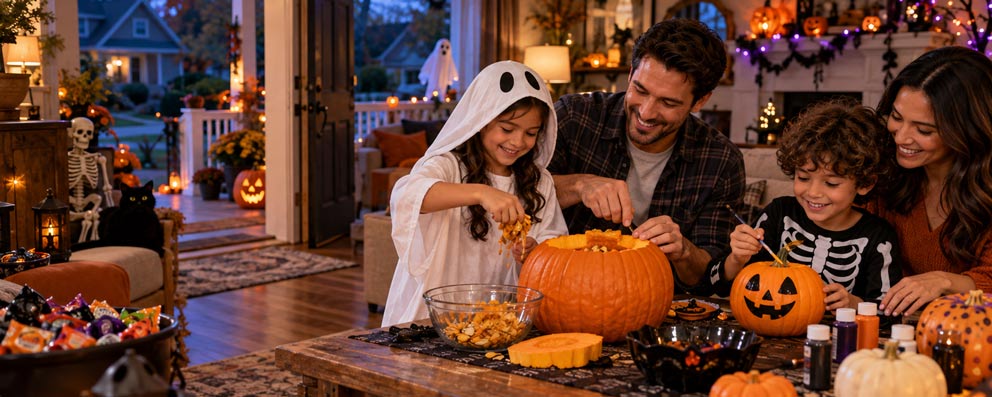
1. Host a Pumpkin Carving or Decorating Contest
Pumpkin carving is a classic Halloween activity because every participant can create something different. Set up a protected work surface, provide washable markers for sketching, and offer simple templates for younger children. Adults and teenagers can compete in categories such as funniest face, best traditional jack-o’-lantern, most detailed design or most creative no-carve pumpkin.
For a child-friendly version, replace carving tools with paint, stickers, fabric, felt shapes and removable accessories. Display the finished pumpkins together and let guests vote with colored tokens. Battery-operated lights are a practical alternative to open-flame candles, especially around children, costumes and crowded walkways.
2. Create a Halloween Scavenger Hunt
A scavenger hunt works indoors, in a backyard or across several neighborhood homes. Hide clues near familiar Halloween symbols such as pumpkins, black cats, skeletons, witches and ghosts. Each clue can lead to a small treat, a puzzle piece or the next location.
To make the route feel more theatrical, use different décor zones. A glittering graveyard lantern can mark the cemetery clue, while a glowing haunted house can signal the final destination. SYL’s Halloween Water Lanterns include illuminated scenes that can serve as visible landmarks without requiring permanent installation.
3. Build a Themed Trick-or-Treat Candy Station
Turn candy distribution into an activity by creating a small story around the table or porch. A witch’s kitchen might use cauldrons, potion labels and green lighting. A haunted railway station could include vintage luggage, skeleton passengers and a mysterious conductor. A gothic wedding theme can combine black flowers with a skeleton couple centerpiece.
Separate treats by allergy information where possible, keep non-food prizes available and use clear containers or individual portions. Position the main decorative piece behind or beside the serving area so children do not need to reach across electrical cords or fragile objects. A product such as the Halloween Skeleton Couple Carriage Snow Globe can anchor a whimsical gothic display while leaving the serving surface organized.
4. Organize a Costume Parade and Fun Awards
A costume parade gives everyone a chance to participate, including children who may not enjoy competitive games. Create a short route through the room, yard or community area and finish at a photo backdrop. Instead of choosing only one winner, offer several playful awards: best homemade costume, funniest character, most creative group, best pet costume and best use of recycled materials.
Keep the route brightly lit and free of cords, low props and uneven surfaces. The U.S. Consumer Product Safety Commission recommends costumes that fit properly, allow adequate visibility and stay away from open flames. These precautions are especially important when long capes, masks or crowded walkways are involved.
5. Design a DIY Haunted Graveyard
A haunted graveyard can become both a decorating project and an activity zone. Participants can create names and funny epitaphs for lightweight tombstones, arrange faux moss and branches, or build a path through the display. Younger children may prefer humorous names, while older groups can develop a connected ghost story for the entire cemetery.
Add depth by mixing large silhouettes with small illuminated details. The Halloween Graveyard Glitter Water Lantern brings a miniature cemetery scene to a tabletop, while larger animatronic decorations can create movement near the entrance. Keep pathways clear and use products only in the indoor or outdoor environments for which they are designed.
6. Set Up an Interactive Surprise Zone
Interactive Halloween decorations are most effective when guests do not see the surprise too early. Place a motion- or sound-activated character near a doorway, behind a display panel or beside a bowl of wrapped treats. Mark a comfortable approach route and give younger guests the option to bypass the effect.
A moving skeleton, talking telephone, emerging ghost or sensor-activated creature can turn a few seconds of interaction into the moment guests remember most. Explore SYL’s Halloween animatronic decorations for examples using movement, lighting and sound. For public events, test the trigger distance, sound level, battery condition and reset time before visitors arrive.
7. Make a Halloween Photo Booth
A photo booth encourages guests to slow down, interact and share the event. Use a simple background with two or three strong visual layers: a large haunted-house or moon silhouette, a foreground prop and one illuminated accent. Provide lightweight signs, hats, masks or handheld frames that are easy to sanitize and reuse.
Lighting matters more than adding dozens of small props. Place a soft light near the camera and colored Halloween lighting behind the subjects. Avoid rapid flashing effects around visitors who may be sensitive to them. For inspiration on creating coordinated scenes, see Halloween Decor Trends 2026.
8. Plan a Spooky Movie Night
Choose the film according to the youngest viewer and divide the room into cozy seating zones. Add themed popcorn containers, pumpkin-shaped snacks and a warm drink station. Before the movie, invite guests to vote on a short list of titles or dress as a character from the selected film.
Use low-level LED décor instead of complete darkness so people can move safely. A compact Halloween Haunted House Glitter Snow Globe can provide a moving illuminated accent on a mantel or side table without distracting from the screen.
9. Hold a Ghost-Story Circle
Invite each guest to contribute one sentence to a shared story. Start with a simple prompt, such as: “At midnight, the old telephone began to ring.” Continue around the circle until the group reaches a surprising ending. For children, keep the story silly and magical; for adults, use timed turns or mystery cards containing characters, locations and objects.
A lantern, vintage telephone or haunted-house decoration can act as the story’s central prop. Dim the main lights but keep exits and walking paths visible. Recorded ambience should stay low enough that every storyteller can be heard.
10. Prepare a Halloween Craft Table
Craft activities give children and adults a quieter option during a busy party. Easy projects include paper bats, painted mini pumpkins, felt masks, spooky garlands, monster bookmarks and decorated treat bags. Organize supplies in labeled trays and prepare one finished example of each project.
Use age-appropriate scissors and adhesives, cover the table, and keep small components away from very young children. Finished crafts can become party favors or be added to a community display. Retailers can also use a craft table during an in-store Halloween weekend to encourage longer visits and connect products with an experience.
11. Play the Halloween Mystery Box Game
Place safe foods or textured objects inside covered containers and ask guests to identify them by touch. Peeled grapes can become “monster eyes,” cooked spaghetti can become “witch hair,” and soft gelatin can become “slime.” Use separate spoons or disposable gloves when needed, and clearly manage food allergies.
Give each box a short backstory and decorate the exterior without revealing its contents. This low-cost activity works especially well between more energetic games and can be adjusted from funny to mildly spooky.
12. Run a Monster Dance and Freeze Game
Create a Halloween playlist, clear a safe dance area and ask guests to freeze like a monster whenever the music stops. Add rounds such as zombie walk, skeleton shake or witch flight. Small prizes can reward the funniest pose, best teamwork or most dramatic freeze.
Use lighting effects around the edges of the room rather than placing equipment in the dancing area. Keep volume appropriate for children and neighbors, and alternate energetic songs with quieter activities.
13. Create a Trunk-or-Treat Theme
Trunk-or-treat events let families move between decorated vehicles in a controlled location. Choose one clear theme for each trunk: pirate treasure, friendly ghosts, haunted carnival, monster laboratory or gothic garden. A strong background, one recognizable character and a coordinated candy container are usually more effective than a crowded mix of unrelated props.
Secure every decoration so it cannot fall or blow into the driving area. Keep vehicle engines off during the event, maintain clear pedestrian routes and follow the organizer’s electrical and fire-safety rules. Battery-powered décor can simplify setup where outlets are not available.
14. Start a Neighborhood Halloween Yard Contest
A yard contest turns decorating into a shared community activity. Offer categories such as best family-friendly display, scariest yard, most creative lighting, best small-space design and best handmade feature. Publish a simple walking map so neighbors can visit each display safely.
Ask participants to avoid blocking sidewalks and to keep cords, stakes and low decorations away from pedestrian routes. Timers can limit bright lights and sound effects to agreed hours. For buyers or event planners developing larger displays, SYL’s wholesale Halloween decorations include animated, illuminated, tabletop and themed product directions.
15. Build a Tabletop Haunted Village
A miniature haunted village is an activity that can develop throughout October. Begin with one central haunted house, then add a graveyard, lighthouse, pumpkin patch, carriage or character scene each week. Family members can write short stories for each location or move small figures through the village.
Varying heights makes the display easier to see, while dark fabric and hidden risers help unite different pieces. Products such as the Halloween Skeleton Lighthouse Water Lantern combine a recognizable silhouette with LED light and swirling glitter, making them suitable focal points for a layered display.
How to Choose the Right Halloween Activities
Start with the audience and location rather than selecting activities at random. A successful plan usually includes one active game, one creative station, one photo moment and one quieter experience.
- For young children: use friendly characters, simple crafts, pumpkin painting and short scavenger hunts.
- For teenagers: add escape-style clues, costume challenges, dramatic photo areas and controlled surprise effects.
- For adults: consider themed dinners, mystery games, movie marathons and more detailed décor.
- For mixed-age events: label areas by scare level and provide a clearly visible no-scare route.
- For retail or community events: prioritize visitor flow, reset time, durability, accessibility and staff supervision.
Halloween Activity Safety Checklist
- Use battery-operated lights instead of open flames around costumes, children and crowded displays.
- Keep stairs, exits, sidewalks and activity routes well lit and free of cords or loose props.
- Check that masks allow clear vision and breathing, and that costumes do not drag on the ground.
- Confirm food ingredients and provide clearly separated allergy-friendly or non-food treats.
- Secure outdoor decorations and use only electrical products rated for the intended environment.
- Test animated props in advance and provide a way for guests to avoid intense sound, movement or flashing lights.
- Supervise carving tools, small craft parts, electrical equipment and activities near roads.
For additional guidance, review the U.S. Consumer Product Safety Commission’s Halloween safety tips and the National Fire Protection Association’s Halloween fire-safety guide.
Turning Halloween Activities into a Complete Seasonal Experience
The strongest Halloween events do not treat activities and decorations as separate decisions. A scavenger hunt needs visual landmarks. A costume parade benefits from a photo destination. A candy station becomes memorable when it tells a story. Coordinated pumpkins, skeletons, ghosts, water lanterns and animatronic characters help connect these moments into one experience.
Retail buyers can use the same principle when planning an assortment: combine accessible tabletop pieces with illuminated products and one or two interactive statement items. Explore SYL’s complete Halloween collection, or review our OEM Halloween decoration capabilities for custom characters, lighting, sound, motion, finishes, packaging and private-label programs.
Frequently Asked Questions About Halloween Activities
What are the most popular Halloween activities?
Popular Halloween activities include handing out candy, wearing costumes, decorating the home or yard, carving pumpkins, watching scary movies, attending parties and visiting haunted attractions. The best choice depends on the participants’ ages, available space and preferred scare level. See the NRF Halloween data and trends for current U.S. participation insights.
What are easy Halloween activities for families?
Pumpkin painting, a short scavenger hunt, a costume parade, a family movie night and simple paper crafts are easy to organize. Choose two or three activities rather than overfilling the schedule, and allow time for photos, snacks and free play.
What Halloween activities work for a party?
A balanced party can include a monster freeze dance, costume awards, mystery touch boxes, a craft table and a photo booth. Add one quieter activity, such as storytelling or a movie corner, so guests can take a break.
How can I make Halloween activities less scary for children?
Use smiling pumpkins, friendly ghosts and playful colors instead of realistic horror. Reduce sudden sound and movement, keep rooms softly lit, explain interactive effects before activating them and provide a no-scare route.
When should I start planning Halloween activities?
Begin four to eight weeks before the event if you need costumes, coordinated décor or invitations. Larger neighborhood, school or retail events may require several months for approvals, product sourcing, staffing and safety planning. NRF research shows many consumers start Halloween shopping in September or earlier.
Can Halloween decorations be part of the activity?
Yes. Decorations can become clue markers, story props, photo backdrops, game targets or interactive surprises. This approach makes each product contribute to the guest experience instead of serving only as background.