
Halloween Consumer Trends 2026: What Retailers and Seasonal Buyers Need to Know
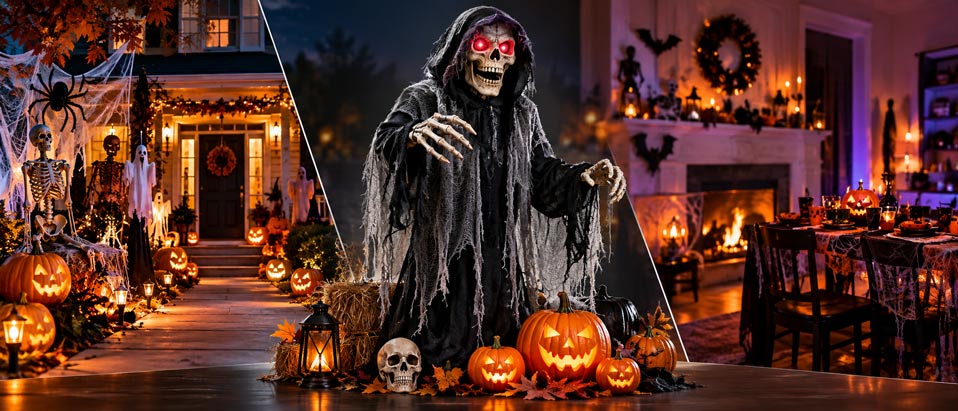
halloween-consumer-trends-2026
Halloween continues to evolve from a one-night celebration into a broader seasonal retail event. In 2026, consumers are shopping earlier, maintaining strong spending, prioritizing decorations, looking for reusable products, and using digital tools to discover ideas before they buy. For retailers, importers, distributors, and seasonal décor brands, understanding these Halloween consumer trends can help shape product development, assortment planning, pricing, merchandising, and sourcing decisions for future seasons.
According to the National Retail Federation, U.S. Halloween spending is expected to reach $13.5 billion in 2026, with 74% of consumers planning to celebrate. The data shows that Halloween demand remains resilient even while shoppers pay closer attention to value.
2026 Halloween Spending Remains Strong
The 2026 Halloween market continues to represent a major seasonal sales opportunity. NRF expects consumers to spend an average of $115.14 per person. Decorations, costumes, candy, parties, and seasonal experiences all contribute to a longer and more commercially important Halloween season.
For seasonal product buyers, the important point is not simply that consumers are spending. It is that spending is spread across several product categories and begins well before October 31. This creates opportunities for retailers to build coordinated Halloween collections instead of relying on a narrow group of last-minute products.
1. Halloween Is Becoming a Full Season, Not a Single Day
One of the clearest Halloween consumer trends is the continued expansion of the shopping calendar. NRF reports that 49% of consumers began Halloween shopping in September or earlier in 2026. The holiday is increasingly connected with the broader fall season, giving retailers a longer window for merchandising and promotion.
The 2026 Deloitte Halloween Survey also found that the earliest shoppers, those who start before mid-August, plan to spend approximately 1.7 times more than late shoppers across Halloween activities and retail categories.
For B2B buyers, this means sourcing and product development should begin well before the consumer selling season. Retailers that want products on shelves in late summer or early fall need enough lead time for design, sampling, testing, packaging, manufacturing, and international shipping.
Buyers developing exclusive collections can explore our seasonal product development and OEM/ODM services to plan Halloween programs earlier.
2. Halloween Decorations Are a Major Spending Category
Decorations remain one of the strongest Halloween categories. NRF reports that 78% of Halloween shoppers plan to purchase decorations in 2026, with total decoration spending expected to reach approximately $4.3 billion.
This matters for retailers because décor can support multiple price points and usage scenarios. Consumers may purchase small tabletop decorations, porch décor, animated products, pumpkins, skeletons, lighted items, hanging decorations, or larger statement pieces for yards and entrances.
Retailers can build broader assortments by combining:
- Animated Halloween characters
- Motion-activated props
- Lighted pumpkins and skeletons
- Resin figurines and tabletop décor
- Fabric and plush Halloween decorations
- Blow-molded seasonal characters
- Outdoor lighted decorations
- Interactive sound and movement products
For additional sourcing ideas, see our Halloween decorations wholesale guide and explore our seasonal décor product categories.
3. Consumers Want Value, but They Are Not Abandoning Halloween
Affordability is influencing how people shop, but it is not eliminating seasonal demand. NRF found that when consumers face higher-than-expected prices, 31% plan to compare prices, 26% plan to look for coupons or sales, and 34% plan to look for products that can be reused or repurposed.
This creates an important product development opportunity. Instead of competing only on the lowest price, retailers can improve perceived value through better durability, stronger visual impact, reusable designs, improved packaging, or products that can remain relevant throughout the fall season.
Reusable Halloween Décor Can Offer Stronger Perceived Value
Consumers may be more willing to invest in products they can store and use again. Durable skeletons, lighted pumpkins, animated characters, wreaths, tabletop decorations, and outdoor décor can support this preference when materials and construction are suitable for repeated seasonal use.
For buyers, this makes quality control, packaging protection, replacement parts, electrical performance, and product stability increasingly important.
4. Early Shoppers Are High-Value Halloween Consumers
Early Halloween shoppers are especially important for retailers because they tend to be more enthusiastic about decorating, costumes, hosting, and seasonal activities. Deloitte reports that shoppers starting before mid-August expect to spend significantly more than late shoppers.
Retailers targeting these consumers may benefit from:
- Launching Halloween collections earlier
- Offering exclusive or limited-edition products
- Creating coordinated indoor and outdoor collections
- Using strong product photography and demonstration videos
- Refreshing displays throughout August, September, and October
For importers and brands, earlier consumer demand also increases the importance of production planning. A product that reaches the market too late may lose a meaningful part of the selling window even if the product itself is strong.
5. Interactive Halloween Products Fit the Experience-Driven Market
Halloween consumers are not only buying objects. They are creating experiences for homes, parties, porches, neighborhoods, and social media. Products with movement, sound, lighting, sensors, or surprise effects can support this behavior because shoppers immediately understand how the product changes the atmosphere of a space.
Animated Halloween decorations can include moving witches, skeletons, ghosts, pumpkins, animals, talking props, and large seasonal characters. Motion-activated Halloween decorations add another layer of interaction by triggering movement, glowing eyes, sound, or vibration when someone approaches.
These products can also be easier to demonstrate in retail stores, product videos, social posts, and e-commerce listings than static decorations. For wholesale buyers, strong demonstration value can be an important consideration when selecting products for online and omnichannel retail.
6. Consumers Are Building Complete Halloween Environments
Halloween decorating is increasingly about transforming an entire space instead of adding one isolated decoration. Consumers may combine porch displays, tabletop products, yard décor, lighting, hanging decorations, pumpkins, skeletons, and animated characters to create a coordinated scene.
This gives retailers an opportunity to merchandise products as collections rather than individual SKUs. A coordinated assortment can include entry-level products, mid-priced decorative pieces, and a smaller number of higher-impact statement items.
Indoor Halloween Décor
Indoor collections can include resin figurines, lighted tabletop decorations, water lanterns, pumpkins, ghosts, skeleton accessories, and decorative characters. These items work well for shelves, mantels, entry tables, kitchens, and party displays.
Outdoor and Porch Halloween Décor
Outdoor collections can include lighted products, larger skeletons, pumpkins, blow-molded figures, animated characters, pathway décor, and motion-activated props. For products intended for outdoor use, buyers should confirm material, electrical, stability, and weather-related requirements during development.
7. AI Is Entering the Halloween Shopping Journey
Another notable 2026 trend is the growing use of AI during product discovery. NRF reports that 47% of consumers are using AI platforms or tools to support Halloween shopping. Common uses include brainstorming ideas and asking for recommendations during product research.
This creates a new challenge for retailers and e-commerce brands. Product information needs to be clear enough for both traditional search engines and AI-assisted discovery. Useful product pages should explain what the product is, where it is used, what it does, dimensions, materials, lighting or animation features, power requirements, and the type of Halloween setting it fits.
For manufacturers and wholesale buyers, product naming and content should be developed early so retailers receive accurate specifications, image assets, product videos, packaging information, and marketing descriptions before launch.
8. Consumers Shop Across Multiple Retail Channels
NRF reports that discount stores remain the leading Halloween shopping destination in 2026, followed by specialty Halloween or costume stores and online channels. Interest in local and small businesses has also increased over the past decade.
This means Halloween products may need to perform across very different retail environments. A product designed for a mass retailer may require compact packaging, strong shelf visibility, and efficient carton utilization. A specialty store may prioritize unusual designs and dramatic visual impact. E-commerce sellers may place greater emphasis on demonstration videos, shipping protection, clear dimensions, and products that photograph well.
For professional buyers, defining the target channel before development can help determine product size, materials, packaging, price positioning, and feature complexity.
What Halloween Consumer Trends Mean for Retail Buyers
The 2026 data suggests several practical sourcing priorities for retailers, importers, distributors, and private-label brands.
Start Product Development Earlier
Consumers are shopping before October, so Halloween sourcing timelines should move earlier as well. Custom products require additional time for design, prototyping, revisions, testing, packaging, and production.
Build Good-Better-Best Price Architecture
Value-conscious consumers do not necessarily want the cheapest product. A balanced assortment can combine accessible items with more detailed, animated, lighted, or oversized products at higher price points.
Prioritize Reusable and Visually Distinctive Products
Reusable décor can provide stronger value perception, while distinctive designs can help retailers avoid assortments that look identical to competing stores.
Use Motion, Light, and Sound Selectively
Interactive features can increase visual impact, but they also add engineering and quality-control requirements. Buyers should evaluate sensor performance, motors, sound modules, LEDs, switches, battery compartments, adapters, and packaging before mass production.
Develop Collections Instead of Isolated Products
Coordinated themes make it easier for retailers to build displays and increase cross-selling. A character concept can sometimes be developed across multiple materials, sizes, and functions to create a more complete retail story.
How SYL Crafts Supports Halloween Product Development
SYL Crafts is a seasonal décor manufacturer serving retailers, importers, distributors, e-commerce sellers, and brands. With more than 17 years of experience, we support Halloween product development across multiple categories, including animated decorations, motion-activated props, resin figurines, fabric and plush décor, blow-molded products, lighted decorations, water lanterns, and custom seasonal projects.
Our OEM and ODM product development capabilities cover concept development, design, materials, functions, prototyping, packaging, quality control, and bulk production. Buyers developing more complex custom projects can also explore our commercial and public art development capabilities.
Learn more about SYL Crafts or review our guide to choosing a Halloween decorations manufacturer.
Frequently Asked Questions About Halloween Consumer Trends
How much are U.S. consumers expected to spend on Halloween in 2026?
The National Retail Federation expects total U.S. Halloween spending to reach approximately $13.5 billion in 2026, with average spending of $115.14 per person.
Are Halloween consumers shopping earlier?
Yes. Nearly half of consumers begin shopping in September or earlier, and research indicates that some highly engaged Halloween shoppers begin before mid-August.
Are Halloween decorations still a strong retail category?
Yes. NRF reports that 78% of Halloween shoppers plan to purchase decorations in 2026, with decoration spending expected to reach about $4.3 billion.
What Halloween products are suitable for retailers and importers?
Popular categories include animated characters, motion-activated props, skeletons, pumpkins, lighted decorations, resin figurines, fabric products, blow-molded décor, outdoor lighted products, and other interactive seasonal decorations.
What should buyers consider when developing Halloween decorations?
Buyers should consider target retail channel, price point, product size, materials, functions, packaging, compliance requirements, production lead time, quality control, and shipping schedule. Interactive products also require additional testing of sensors, motors, lighting, sound, and electrical components.
Conclusion: Halloween Demand Is Expanding Beyond October 31
The most important Halloween consumer trends in 2026 point toward a longer shopping season, strong decoration demand, value-conscious purchasing, growing interest in reusable products, experience-driven decorating, and more digital product discovery. For seasonal retailers and importers, these shifts create opportunities to plan earlier, develop more distinctive collections, and build assortments that combine price accessibility with stronger visual and interactive features.
If you are planning a future Halloween retail program, contact SYL Crafts to discuss wholesale products, OEM/ODM development, custom designs, packaging, and bulk production for your next seasonal collection.