
Halloween Decoration Trends 2026: 8 Product Trends Retailers and Buyers Should Watch
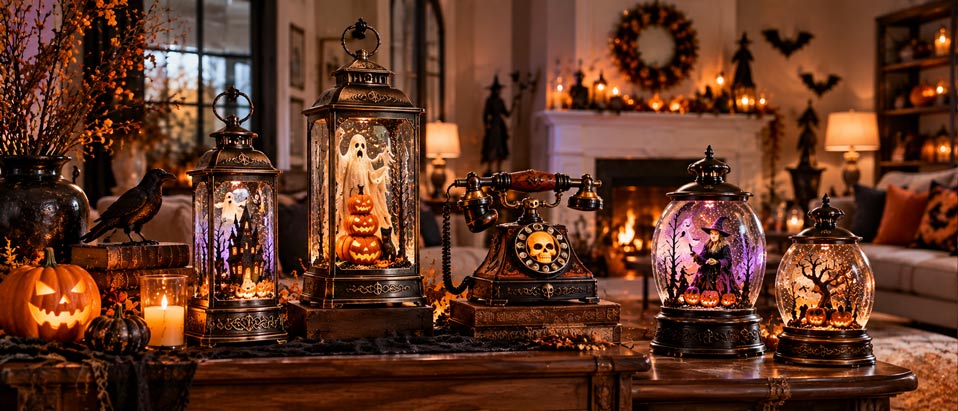
Halloween Decoration Trends 2026
Halloween décor is getting bigger, earlier, more interactive, and increasingly design-driven. What was once a relatively short retail event centered around October 31 has evolved into a much longer seasonal opportunity. In 2026, shoppers are decorating earlier, building more elaborate home and yard displays, and looking for products that deliver stronger visual impact. For retailers, importers, distributors, and seasonal décor brands, these changes are influencing everything from product size and functionality to materials, packaging, and merchandising.
Here are eight Halloween decoration trends for 2026 that buyers should watch when planning future collections.
1. Giant Halloween Decorations Continue to Grow
One of the most visible Halloween trends is the continued popularity of oversized decorations. Large skeletons, giant mummies, oversized monsters, witches, pumpkins, and other statement characters have moved from specialty displays into mainstream residential Halloween decorating.
Home Depot’s 2026 Halloween collection illustrates how far this category has developed. Alongside its returning 12-foot skeleton, the retailer introduced an 11-foot mummy and an 8-foot animated plant monster. View the Home Depot 2026 Halloween collection.
The popularity of oversized skeletons also continues well beyond a single viral product. Large-scale Halloween figures are increasingly being treated as seasonal centerpieces around which consumers build the rest of their yard display.
For retail buyers, giant decorations can serve as hero products that attract attention even when they represent only a small portion of the overall assortment.
Product Opportunities
- Giant skeletons
- Oversized witches
- Large ghosts and reapers
- Giant pumpkins
- Animated monsters
- Large blow-molded characters
- Oversized lighted yard décor
Large products require careful engineering. Stability, carton dimensions, assembly structure, shipping costs, and storage requirements should all be considered during development.
2. Animatronics Are Becoming More Interactive
Movement alone is no longer the only selling point for animated Halloween decorations. Consumers increasingly encounter products combining movement, lighting, sound, sensors, and interactive controls.
Home Depot’s 2026 collection incorporates upgraded sound, lighting, and servo-driven movement into major Halloween products. These functions help make seasonal products more dramatic and easier to demonstrate in stores and online.
This creates opportunities for manufacturers to develop more sophisticated products such as motion-activated skeletons, talking witches, moving ghosts, animated pumpkins, sound-activated characters, glowing-eye creatures, moving heads and arms, and interactive haunted props.
For retailers, these products have another advantage: they demonstrate well. A short video showing a skeleton suddenly moving or a pumpkin lighting up can communicate the product’s value much faster than static photography.
Buyers interested in this category can explore our Animated Halloween Decorations Wholesale collection.
3. Motion-Activated Décor Creates Surprise
Sensors are becoming increasingly useful in Halloween product design because they turn passive decorations into experiences. Instead of continuously playing an animation, a product can remain still until someone approaches.
The character may suddenly move, shake, speak, scream, illuminate its eyes, play music, or activate a mechanical effect. This surprise element works particularly well around entrances, porches, haunted attractions, and party environments.
It also allows retailers to communicate a simple consumer benefit: walk past it, and something happens.
For sourcing ideas, see our Motion Activated Halloween Decorations Wholesale guide.
4. Outdoor Halloween Displays Are Becoming More Elaborate
The front yard and porch have become major Halloween decorating spaces. Consumers are increasingly building complete scenes instead of placing one pumpkin beside the door.
According to the National Retail Federation, a large share of U.S. consumers plan to decorate their homes or yards for Halloween. View NRF Halloween data.
Outdoor Halloween displays may combine skeletons, tombstones, pumpkins, ghosts, lanterns, pathway lighting, spider webs, animated characters, inflatable decorations, and large focal-point props.
This opens opportunities for retailers to sell coordinated product families rather than individual decorations. A skeleton, for example, can become part of a larger collection containing tombstones, ravens, lanterns, skulls, and pathway décor.
5. Gothic Halloween Décor Is Becoming More Sophisticated
Not every Halloween shopper wants bright orange pumpkins and cartoon ghosts. Another strong design direction in 2026 is a darker, more sophisticated Gothic aesthetic.
Current interior trends include Victorian-inspired accessories, antique-style mirrors, black candles, vintage books, darker floral arrangements, and dramatic monochromatic palettes.
Potential color combinations include:
- Black + Antique Gold
- Burgundy + Black
- Dark Purple + Bronze
- Black + Silver
- Deep Green + Aged Metal
These palettes can work especially well for candleholders, lanterns, ravens, skulls, resin figurines, tabletop decorations, and decorative lighting.
The result is Halloween décor that feels more like interior decoration and less like a disposable party prop.
6. Halloween Products Are Becoming More Reusable
Consumers remain enthusiastic about Halloween, but value is becoming more important. NRF expects U.S. Halloween spending to remain strong in 2026 while consumers continue to pay closer attention to price and value.
That does not necessarily mean consumers only want cheaper products. It can also increase interest in decorations that can be stored and used again.
Retailers may therefore benefit from products with stronger construction, replaceable batteries, durable finishes, stable bases, protective packaging, reusable storage cartons, and styling that works throughout the broader fall season.
Some consumers are also choosing decorations that can transition from Halloween into general autumn décor, including pumpkins, wreaths, lanterns, and warm seasonal accessories.
For manufacturers, durability becomes part of the value proposition.
7. Halloween Is Becoming a Multi-Month Retail Season
Perhaps the biggest trend is not a particular product. It is when consumers begin buying it.
Halloween is increasingly behaving like a seasonal lifestyle instead of a single holiday. Early-season activity now begins in late summer, with concepts such as Summerween helping extend the retail calendar.
NRF reports that many consumers begin Halloween shopping in September or earlier. See NRF Halloween shopping trends.
For B2B buyers, this has a major implication: the sourcing calendar must move earlier too.
If retailers want products on shelves in July, August, or early September, product development cannot begin in late summer.
Custom projects may require time for concept development, design, prototyping, revisions, testing, packaging, production, shipping, and retail distribution.
Brands developing exclusive products can learn more about our Seasonal Product Development services.
8. Halloween Décor Is Becoming More Experiential
Consumers increasingly want Halloween decorations that change how a space feels. A static product can be attractive, but a product that moves, lights up, reacts, makes sound, or surprises someone creates an experience.
This helps explain why large animatronics, interactive props, and immersive outdoor displays continue to attract retailer attention.
This trend is particularly important for e-commerce. Products with strong visual or interactive effects naturally produce better demonstration content for TikTok, Instagram Reels, YouTube Shorts, Amazon listings, Shopify product pages, and retailer social advertising.
For product developers, this means the question is no longer only: What does the decoration look like?
It is also: What happens when the customer turns it on?
What These Halloween Decoration Trends Mean for Retail Buyers
For professional buyers, the 2026 market suggests a balanced assortment strategy. Rather than building an entire collection around one trend, retailers can combine several product levels.
Entry-Level Décor
Small pumpkins, ghosts, skeleton accessories, tabletop decorations, and simple lighted products can create accessible price points.
Mid-Range Feature Products
Resin figurines, lighted décor, animated tabletop products, and medium-sized motion-activated characters can provide stronger differentiation.
Statement Products
Large animatronics, oversized skeletons, outdoor illuminated decorations, and interactive characters can serve as traffic-driving hero products.
This creates a natural Good → Better → Best price structure within the same Halloween collection.
How SYL Crafts Develops Halloween Decorations
SYL Crafts develops and manufactures seasonal decorations for retailers, importers, distributors, brands, and e-commerce sellers.
Our Halloween product capabilities include animated Halloween décor, motion-activated decorations, resin figurines, fabric and plush characters, blow-molded decorations, lighted indoor and outdoor décor, water lanterns, large seasonal characters, and custom OEM/ODM projects.
Our development process can support concept design, prototyping, materials, mechanical functions, electronics, packaging, quality control, and bulk manufacturing.
For custom seasonal projects, explore our Seasonal Product Development capabilities or learn more about choosing a Halloween Decorations Manufacturer.
Frequently Asked Questions About Halloween Decoration Trends 2026
What Halloween decorations are trending in 2026?
Major trends include oversized skeletons and characters, animatronics, motion-activated decorations, elaborate outdoor displays, Gothic-inspired décor, reusable decorations, and interactive products combining movement, sound, and lighting.
Are giant Halloween decorations still popular?
Yes. Major retailers continue to expand oversized Halloween collections with giant skeletons, mummies, monsters, witches, and other large outdoor characters.
Are consumers buying Halloween decorations earlier?
Yes. Halloween shopping continues to move earlier in the year, with many consumers beginning seasonal shopping in September or before.
What Halloween products are suitable for wholesale buyers?
Common wholesale categories include skeletons, pumpkins, witches, ghosts, animated characters, motion-activated props, resin figurines, blow-molded products, lighted decorations, and outdoor seasonal décor.
Can Halloween decorations be customized for retailers?
Yes. OEM/ODM development can include custom characters, colors, sizes, materials, movement, lighting, sounds, sensors, packaging, and other features depending on the product and compliance requirements.
Conclusion
The biggest Halloween decoration trends for 2026 share one common direction: Halloween is becoming bigger, earlier, and more experiential.
Consumers are no longer limiting Halloween decorating to a few inexpensive items placed outside the house in late October. Large statement products, animated characters, sophisticated indoor décor, interactive technology, and complete outdoor scenes are helping transform Halloween into a broader seasonal decorating occasion.
For retailers and importers, that creates opportunities to develop collections across multiple sizes, functions, and price points.
Planning your next Halloween collection? Contact SYL Crafts to discuss wholesale products, OEM/ODM development, custom Halloween decorations, and bulk production.