
What Are Seasonal Products? Definition, Types & 20 Examples
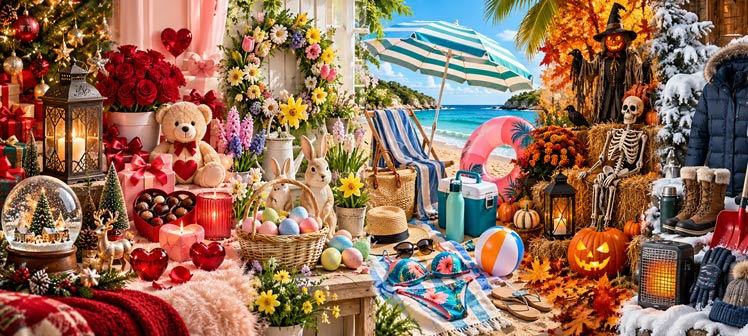
Seasonal products are items that experience predictable changes in consumer demand during certain times of the year. These changes may be driven by holidays, weather, school calendars, cultural celebrations, or recurring events.
Examples include Christmas decorations, Halloween costumes, winter coats, summer swimwear, Easter baskets, and back-to-school supplies. Some products sell mainly during a short period, while others remain available year-round but become more popular during a particular season.
For retailers and ecommerce businesses, understanding seasonal products is essential for inventory planning, purchasing, marketing, and product development. This guide explains what seasonal products are, explores 20 real-world examples, and shows how businesses can manage seasonal demand.
1. What Is a Seasonal Product?
A seasonal product is a product whose sales or customer demand rise and fall according to recurring periods, such as holidays, weather seasons, or annual events.
The defining characteristic is predictable seasonality. Demand follows a recurring pattern rather than remaining relatively stable throughout the year.
For example, Halloween decorations typically experience stronger demand before October 31, while winter coats become more popular during colder months. Back-to-school products often see increased demand before a new academic year begins.
Seasonal products are not necessarily unavailable outside their peak season. Many can be purchased year-round, although their strongest selling periods may be concentrated within several weeks or months.
Simple definition: Seasonal products are goods that consumers purchase more frequently during specific recurring times of the year.
2. 20 Examples of Seasonal Products
Seasonal products appear across many industries, including home decoration, fashion, food, outdoor recreation, electronics, gifts, and school supplies.
The following 20 examples explain how different types of products are connected to recurring customer needs.
| No. | Seasonal Product | Typical Peak Demand |
|---|---|---|
| 1 | Christmas ornaments | Before Christmas |
| 2 | Artificial Christmas trees | Autumn and Christmas season |
| 3 | Christmas snow globes | Holiday shopping season |
| 4 | Halloween costumes | September–October |
| 5 | Halloween animatronic decorations | Before Halloween |
| 6 | Decorative pumpkins | Autumn and Halloween |
| 7 | Easter baskets | Before Easter |
| 8 | Easter bunny figurines | Spring and Easter |
| 9 | Valentine’s Day chocolates | Before February 14 |
| 10 | Heart-shaped decorative gifts | Valentine’s Day season |
| 11 | Winter coats | Colder months |
| 12 | Snow shovels | Snowfall season |
| 13 | Electric space heaters | Colder months |
| 14 | Swimwear | Before and during summer |
| 15 | Beach umbrellas | Warm-weather vacation season |
| 16 | Inflatable pool toys | Summer |
| 17 | Backpacks and school supplies | Back-to-school season |
| 18 | Graduation decorations | Graduation season |
| 19 | Thanksgiving table decorations | Before Thanksgiving |
| 20 | Seasonal gardening supplies | Spring and planting seasons |
Actual selling periods vary by country, climate, school calendar, and consumer behavior. For example, winter clothing demand follows different months in the Northern and Southern Hemispheres.
Retail insight: Understanding when customers need each product helps businesses prepare inventory before demand reaches its peak.
3. What Are the Main Types of Seasonal Products?
Seasonal products can be grouped into several categories according to the factors driving demand. Recognizing these categories helps retailers develop suitable product assortments and purchasing schedules.
Holiday-Based Seasonal Products
Holiday products are associated with annual celebrations such as Christmas, Halloween, Easter, Valentine’s Day, and Thanksgiving.
Typical examples include Christmas ornaments, decorative lanterns, Halloween props, Easter figurines, and romantic gifts. These products often have a clearly defined selling window.
Weather-Based Seasonal Products
Weather-based products experience increased demand as temperatures and environmental conditions change.
Examples include winter jackets, portable heaters, beach umbrellas, swimsuits, and snow removal equipment. Demand can vary significantly across geographic markets.
Event-Based Seasonal Products
Event-based products are purchased for recurring occasions such as graduation ceremonies, sporting seasons, school openings, and annual festivals.
Backpacks, graduation decorations, event merchandise, and school supplies are common examples.
Seasonal Home Decoration Products
Seasonal home decorations are designed to reflect particular holidays or times of the year. They include Christmas wreaths, Halloween animatronics, Easter decorations, autumn figurines, and seasonal tabletop accessories.
Retailers can develop themed collections that combine multiple products with coordinated colors, materials, and decorative styles.
4. Seasonal Products vs. Evergreen Products
One of the most important differences in retail product planning is the distinction between seasonal and evergreen products.
Seasonal products experience predictable demand peaks, while evergreen products generally maintain more consistent demand throughout the year.
| Feature | Seasonal Products | Evergreen Products |
|---|---|---|
| Demand Pattern | Recurring seasonal peaks | Relatively stable year-round |
| Peak Selling Period | Specific holidays or seasons | Throughout the year |
| Inventory Planning | Requires seasonal forecasting | Often supports ongoing replenishment |
| Marketing Strategy | Time-sensitive campaigns | Continuous promotion |
| Inventory Risk | Potential excess stock after peak season | Different, generally less seasonal risk |
| Examples | Halloween decorations, winter coats | Basic kitchen utensils, everyday stationery |
Some products can serve both markets. A decorative LED lantern may be sold throughout the year, while versions featuring Santa Claus, pumpkins, or Easter characters are more closely connected to specific holidays.
Retailers can combine seasonal collections with evergreen products to maintain a wider assortment throughout the year.
For additional information about year-round product demand, read Shopify’s guide to evergreen products.
5. Why Are Seasonal Products Important in Retail?
Seasonal merchandise allows businesses to respond to changing consumer needs and create relevant shopping experiences throughout the year.
For retailers, seasonal products can support product variety, merchandising campaigns, limited-time promotions, and customer engagement.
Creating New Shopping Opportunities
Seasonal collections encourage customers to explore new designs, decorations, and gifts associated with upcoming celebrations.
For example, a home décor retailer can introduce Easter decorations in spring, Halloween products in autumn, and Christmas collections toward the end of the year.
Supporting Promotional Campaigns
Seasonal merchandise can be featured in themed advertising, email campaigns, retail displays, and holiday promotions.
These campaigns are often organized around predictable events, allowing retailers to prepare marketing activities in advance.
Expanding Product Assortments
Seasonal products can complement everyday merchandise. A retailer selling home accessories, for example, may introduce festive tabletop decorations or seasonal lighting products.
Managing Commercial Risks
Seasonal products also create challenges. Incorrect demand forecasts, delayed deliveries, and unsold inventory can affect profitability.
Retailers should consider the limited selling window when planning purchase quantities, pricing, and promotional schedules.
6. Understanding Seasonal Product Demand
Seasonal demand refers to recurring changes in sales or customer interest associated with predictable periods of the year.
These patterns are influenced by holidays, weather conditions, cultural traditions, shopping behavior, and local market characteristics.
Pre-Season Demand
Customers often begin researching products before the main selling season. Retailers may use this period to launch new assortments, publish buying guides, and prepare promotional campaigns.
Peak Seasonal Demand
Demand generally increases as a relevant holiday or seasonal event approaches. For example, Halloween merchandise often becomes more prominent in retail displays during September and October.
Post-Season Demand
Demand may decline quickly after the relevant event. Retailers may need to manage leftover inventory through markdowns, storage, or future-season planning.
Geographic Differences
Seasonal demand varies between markets. Winter products, summer merchandise, and local holiday decorations may follow different sales patterns in different countries.
Businesses should evaluate their own customer markets rather than assuming every seasonal product follows the same global calendar.
7. How to Identify Seasonal Product Trends
Identifying seasonal product opportunities requires a combination of search research, historical sales information, competitor analysis, and market observation.
Analyze Historical Sales
Previous sales records can help identify recurring demand patterns. Retailers should review product quantities, peak selling weeks, stockouts, and unsold inventory from earlier seasons.
Use Google Trends
Google Trends can help businesses explore changes in search interest across different time periods and geographic markets.
For example, comparing search interest for Christmas decorations, Halloween costumes, and Easter baskets can help illustrate the timing of seasonal consumer attention.
Monitor Retail Market Activity
Retailers can review competing assortments, seasonal merchandising campaigns, industry trade fairs, and customer feedback to identify new product directions.
Evaluate Product Development Feasibility
A promising seasonal product should also meet practical requirements such as manufacturing feasibility, target pricing, quality expectations, and delivery timing.
Buyer tip: A product with strong seasonal interest is not automatically profitable. Production costs, competition, inventory risk, and distribution expenses must also be considered.
8. How to Manage Seasonal Product Inventory
Seasonal inventory management focuses on having suitable products available when customer demand increases, while avoiding excessive stock after the selling period ends.
According to Shopify’s seasonal inventory management guide, businesses can use historical demand, inventory monitoring, and promotional planning to manage seasonal stock more effectively.
Forecast Demand Before Ordering
Review previous sales, market conditions, promotional plans, and expected customer demand before deciding how much inventory to purchase.
Confirm Supplier Lead Times
Seasonal products must arrive before the intended selling period. Buyers should confirm sampling, manufacturing, inspection, and shipping schedules before placing purchase orders.
Monitor Inventory During the Season
Tracking sales performance and remaining inventory helps retailers identify potential stockouts and slow-moving products.
Plan for Leftover Stock
Businesses should consider markdowns, promotional bundles, storage costs, and product reuse when managing post-season inventory.
Seasonal Inventory Planning Checklist
- Identify the target holiday or selling season.
- Review historical sales and customer demand.
- Select products and estimate order quantities.
- Confirm supplier MOQ and production lead times.
- Approve product samples and packaging.
- Schedule production and quality inspections.
- Arrange delivery before the retail launch.
- Monitor sales and manage remaining inventory.
9. How Do Retailers Source Seasonal Products?
Retailers, importers, and distributors often source seasonal merchandise from manufacturers, wholesale suppliers, and specialized product development partners.
Choosing a suitable supplier involves evaluating product capabilities, customization options, manufacturing quality, pricing, and delivery reliability.
Product Range and Manufacturing Capabilities
Suppliers should offer products appropriate for the target market and demonstrate an understanding of the selected seasonal category.
Minimum Order Quantities
MOQ requirements vary by product, materials, tooling, and customization. Buyers should request quotations based on specific product requirements rather than assuming one MOQ applies to all items.
OEM and ODM Customization
Private-label brands may require custom colors, product structures, materials, decorative features, or packaging. Manufacturers should evaluate the feasibility of these changes before production.
Quality and Compliance
Buyers should establish product specifications, inspection requirements, and relevant regulatory obligations for their destination markets.
The U.S. Consumer Product Safety Commission provides information about product safety requirements for goods sold in the United States.
Production and Delivery Planning
Seasonal purchasing decisions should account for manufacturing lead times, shipping schedules, customs clearance, and retail distribution.
Buyer tip: Evaluate the complete landed cost and realistic delivery schedule, not just the factory unit price.
10. Seasonal Products in Home Decoration and Gift Retail
Home decoration and gift retail are important examples of industries with recurring seasonal merchandise. Different holidays create opportunities for themed products, decorative characters, lighting, and coordinated collections.
Christmas Decorations
Christmas collections may include artificial trees, wreaths, garlands, musical snow globes, LED water lanterns, figurines, and illuminated tabletop decorations.
Halloween Decorations
Halloween merchandise includes decorative pumpkins, skeletons, animated witches, motion-activated characters, haunted props, and seasonal lighting products.
Explore wholesale Halloween animatronic decorations for examples of interactive seasonal products.
Spring and Easter Decorations
Spring collections can include artificial floral arrangements, greenery wreaths, rabbit figurines, decorative eggs, and botanical home accessories.
Valentine’s Day and Seasonal Gifts
Romantic figurines, heart-shaped decorations, musical snow globes, and decorative lighting can be developed for Valentine’s Day and related gift collections.
Multi-Season Product Development
Some product platforms can support different seasonal themes. For example, LED glitter water lanterns and water spinners can feature different figurines, colors, and decorative scenes for Christmas, Halloween, and other occasions.
Explore the SYL Crafts wholesale seasonal decoration collection for additional product examples.
11. OEM and ODM Seasonal Product Development
OEM and ODM manufacturing allows retailers and brands to create customized seasonal merchandise based on their target markets, design concepts, and product specifications.
Depending on the project, customization may include product shapes, materials, colors, decorative finishes, electronic functions, and private-label packaging.
Custom Product Concepts
Buyers can provide reference images, drawings, physical samples, or original design concepts for technical and manufacturing review.
Material and Function Selection
Materials and functions should be selected according to product design, target pricing, intended use, and applicable safety requirements.
Sample Development
Product samples allow buyers to evaluate appearance, functionality, quality, and packaging before approving mass production.
Manufacturing and Quality Control
Once samples and specifications are approved, production can proceed according to the agreed schedule and inspection criteria.
Learn more about SYL Crafts OEM and ODM seasonal product development services for customized holiday decorations and decorative home products.
12. Frequently Asked Questions About Seasonal Products
What are seasonal products?
Seasonal products are items whose demand increases during recurring periods of the year, such as holidays, weather seasons, school openings, or annual events. Their sales typically follow predictable seasonal patterns.
What are five examples of seasonal products?
Five common examples are Christmas ornaments, Halloween costumes, Easter baskets, winter coats, and summer swimwear. Each category experiences increased demand during particular times of the year.
What is the difference between seasonal and evergreen products?
Seasonal products experience recurring demand peaks, while evergreen products generally maintain more consistent year-round demand. Some products can serve both markets through different designs or uses.
Why are seasonal products important?
Seasonal products help retailers respond to recurring customer needs, introduce new assortments, and organize holiday or weather-related marketing campaigns.
What are the main types of seasonal products?
Main categories include holiday-based products, weather-based products, event-based merchandise, and seasonal home decorations. These categories may overlap.
Are seasonal products sold only during a specific season?
No. Some seasonal products remain available throughout the year, but their strongest customer demand typically occurs during a particular recurring period.
How do businesses identify seasonal products?
Businesses can analyze historical sales records, Google Trends data, holiday calendars, customer behavior, and market research to identify recurring demand patterns.
How can retailers reduce seasonal inventory risk?
Retailers can improve demand forecasting, confirm delivery schedules, monitor inventory, diversify their assortments, and prepare plans for unsold merchandise after the peak season.
Can seasonal products be customized?
Yes. Depending on manufacturing feasibility, seasonal products can be customized through OEM and ODM services, including product design, materials, colors, functions, and packaging.
13. Conclusion: Understanding Seasonal Products for Better Retail Planning
Seasonal products play an important role in retail because they reflect predictable changes in customer demand. From holiday decorations and gift collections to clothing, outdoor equipment, and school supplies, seasonal merchandise spans many industries.
Understanding product types, demand patterns, and inventory requirements can help businesses make better purchasing and merchandising decisions.
For retailers and brands developing seasonal home decoration collections, product customization and reliable manufacturing planning are also important considerations.
Looking for a seasonal decorations manufacturer? SYL Crafts supports wholesale seasonal décor sourcing, custom product development, and OEM/ODM projects for international retailers, importers, and private-label brands.
Explore Wholesale Seasonal Products | OEM & ODM Development | Contact SYL Crafts