
Seasonal Decor Buying Guide for Retailers and Importers
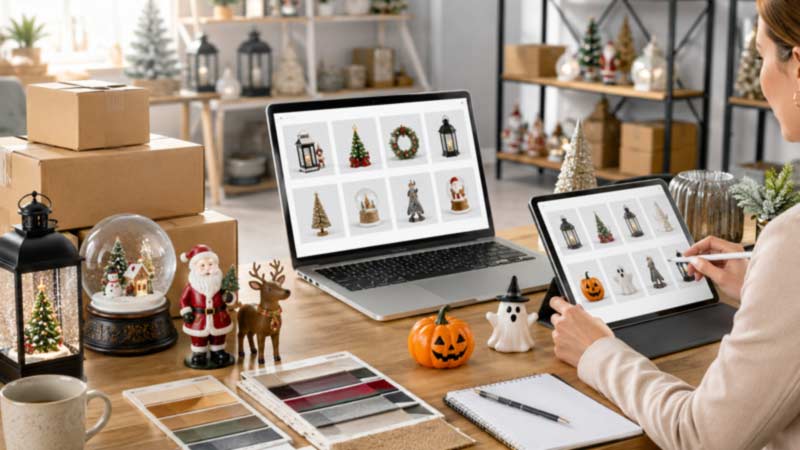
Sourcing seasonal decorations requires more planning than purchasing ordinary year-round home décor. Christmas, Halloween, Harvest and other holiday products must arrive within a limited selling period, which means delays in product development, testing, packaging or shipping can directly affect the commercial value of the entire collection.
A successful seasonal program therefore depends on more than finding attractive products. Buyers must evaluate whether a design fits the target market, whether the supplier can maintain consistent quality, whether the packaging is suitable for international transportation and whether production can be completed before the required delivery window.
This seasonal decor buying guide explains how retailers, importers, distributors and private-label brands can plan a commercially practical collection and reduce common sourcing risks before placing a bulk order.
Start With the Target Customer, Not the Product Catalog
One of the most common sourcing mistakes is selecting products before defining the intended customer. A decoration may look attractive during a supplier presentation but still be unsuitable for the retailer’s price level, store format or regional market.
A mass-market supermarket usually needs recognizable designs, efficient packaging and accessible retail prices. A boutique may prefer smaller quantities, more detailed finishes and products with a distinctive visual identity. An ecommerce seller must pay closer attention to shipping dimensions, product photography and the ability to demonstrate the product through short videos.
Before reviewing samples, the buyer should define where the products will be sold, who is expected to purchase them and what role the collection will play within the wider seasonal program.
This information helps the supplier recommend appropriate materials, dimensions, functions and packaging structures. It also prevents time being spent on products that cannot meet the required price or retail environment.
Build a Collection Instead of Buying Isolated Products
Individual products may generate sales, but coordinated collections are usually easier to merchandise and promote. Customers understand a product range more quickly when several items share the same colors, characters, materials or decorative story.
A Christmas woodland collection, for example, may include a large illuminated reindeer, smaller resin animals, a water globe, tabletop trees and coordinating ornaments. A gothic Halloween collection may connect animated figures with lanterns, skulls, candle holders and smaller tabletop products.
The collection should contain reliable core products, newer trend-led designs and a limited number of visual hero products. Core products provide recognizable seasonal value, while trend-led items refresh the range. Hero products use scale, movement, lighting or detail to attract attention and support promotional content.
The proportion of each type depends on the retailer’s market position. A conservative program may rely more heavily on familiar characters and traditional colors. A fashion-led retailer can introduce a larger percentage of unusual finishes and emerging design directions.
For current product themes and color directions, buyers can review our Holiday Decor Trends 2026 report for Europe and North America.
Plan the Seasonal Development Calendar Early
Seasonal products often require concept development, artwork confirmation, sample production, revisions, testing, packaging design, bulk manufacturing, inspection and international transportation. Each stage can affect the next one.
Complex products require additional time. An animated Halloween figure may need repeated mechanism testing, while a musical water globe may require adjustments to lighting, glitter circulation, sound and internal rotation. A private-label program may also need exclusive packaging, artwork approval and retailer-specific compliance documentation.
Buyers should work backwards from the required warehouse arrival date rather than from the expected retail launch. This creates space for customs clearance, domestic transportation and distribution to individual stores.
A realistic schedule should also include time for sample revisions. The first sample is often used to confirm the main structure, while later samples may be required to finalize colors, materials, functions and packaging.
Beginning development early does not only reduce the risk of delay. It also gives buyers more time to compare options, improve the product and prepare marketing content before inventory arrives.
Prepare a Clear Product Development Brief
A supplier can provide a more accurate quotation and sample when the buyer provides a clear product brief.
The brief should explain the intended holiday, target market, approximate dimensions, preferred materials, colors, functions, packaging format and expected retail position. Reference images can help communicate the visual direction, but they should be supported by written explanations.
Terms such as “premium,” “modern” or “high quality” can mean different things to different people. Buyers should explain which product details create the intended result. This may include a matte metallic finish, softer fabric, a slower movement speed or a heavier product base.
Functional products require even more specific descriptions. Instead of requesting a “lighted and animated skeleton,” the brief should explain which parts move, what color the lights should be, whether the product includes sound and how the customer activates it.
A clear brief reduces quotation differences and makes it easier to compare proposals from different suppliers.
Evaluate the Supplier’s Complete Manufacturing Capability
A visually attractive sample does not automatically prove that a supplier can manage a complete retail program. Buyers should evaluate the supplier’s development, production, testing, packaging and quality-control capabilities together.
A seasonal decoration supplier may need to coordinate several materials and production methods within one product. Resin, fabric, plastic, glass, electrical components and printed packaging may come from different production processes. The supplier must be able to control how these elements work together.
Buyers should also consider whether the manufacturer has experience with similar product categories. A factory experienced in static resin figures may not automatically have the mechanism development ability required for complex animatronics.
For private-label programs, communication and project management are especially important. The supplier should be able to record revisions, confirm approvals and maintain the agreed specifications throughout bulk production.
A strong manufacturing partner should help identify potential problems before production begins rather than simply following an incomplete request.
Use the Sample as a Production Standard
The approved sample should become a clear standard for bulk production. Verbal descriptions alone are rarely sufficient for products that include multiple colors, surface treatments or functions.
During sample approval, buyers should confirm the complete appearance, dimensions, weight, materials, finish, lighting, sound, movement and accessories. Any accepted variation should also be documented.
Colors should be reviewed under appropriate lighting. Metallic surfaces, transparent components and LED effects can appear different in photographs and physical samples. Buyers should therefore avoid approving important finishes only through screen images.
Functional samples should be operated repeatedly. A mechanism that works during one short demonstration may produce noise, heat or unstable movement after longer use.
Once the sample is approved, unnecessary changes should be avoided. Late revisions can affect tooling, packaging dimensions, testing and production schedules.
Select Materials According to Product Use
The correct material depends on the desired appearance, product size, retail price and intended use.
Resin is suitable for detailed figurines, character faces and decorative surfaces. It can reproduce wood, stone and ceramic-inspired textures, although larger solid resin products may become heavy and expensive to transport.
Blow-molded plastic is useful for larger, lightweight decorations. When combined with internal lighting, the entire body can create a visible illuminated effect. This makes blow-molded products suitable for pumpkins, snowmen, reindeer and other statement characters.
Fabric and plush materials support softer characters and products requiring flexible movement. However, buyers should confirm fabric consistency, sewing quality and how the material behaves around moving mechanisms.
Glass and transparent plastics are commonly used for water globes, illuminated domes and lantern windows. Buyers should compare the desired clarity and appearance with the transportation risk and target price.
Mixed-material products can create stronger visual depth, but they also require more careful production control. The connection between different materials must remain stable during transportation and repeated use.
Choose Functions That Add Commercial Value
Lighting, music, movement and sensors can increase customer interest, but every additional function also affects cost, battery consumption, packaging and quality control.
A function should make the product easier to understand or more enjoyable to display. Warm lighting can strengthen a traditional Christmas scene, while motion activation can make a Halloween character more surprising.
Buyers should avoid adding several functions only to increase the number of product features. A complicated product may become harder to operate and more expensive to produce without creating a stronger customer experience.
Separate controls can improve usability. A musical decoration may allow the customer to use the lighting without sound. A Halloween animatronic may provide manual and sensor modes.
Power options should also be reviewed according to the expected operating time. Battery power provides flexible placement, while USB or adapter power may be more suitable for products intended to operate continuously.
More information about lighting, music, movement and sensor development is available in our Interactive Holiday Decorations Wholesale Guide.
Confirm Market Requirements Before Finalizing the Product
A product developed for one market may require changes before it can be sold in another. Electrical specifications, labels, warnings, material restrictions and documentation can vary according to the destination and product structure.
Buyers should identify the target market before approving the final design. Waiting until production is complete may result in packaging revisions, component replacement or additional testing.
The required compliance path depends on whether the product uses batteries, USB power, an adapter or a direct electrical connection. Intended indoor or outdoor use can also affect the product structure and testing requirements.
Retailers may have additional requirements beyond general legal compliance. Large retail programs may request factory audits, product testing reports, social compliance documentation or specific quality-control procedures.
The manufacturer and buyer should agree on testing responsibilities, documentation and approval deadlines before bulk production begins.
Design Packaging Around the Product and Sales Channel
Seasonal packaging must protect the product, communicate its main features and fit the intended retail environment.
A physical store may need packaging that allows customers to see or activate the product. Ecommerce packaging usually requires stronger protection because the item may be shipped individually rather than as part of a full export carton.
Large products can use detachable structures to reduce shipping volume. However, the assembly process must remain simple, and the final product should remain stable after assembly.
Fragile resin, glass and mechanical components require secure internal packaging. The product should not move inside the box, but protective materials should not place pressure on delicate parts.
The packaging should clearly state the product size, power requirements, included accessories and operating method. When the product has music, movement or several modes, the main function should be understandable without a long instruction manual.
Retail-ready packaging also needs consistent branding. Colors, product photography and typography should support the wider collection rather than make each item appear unrelated.
Calculate the Real Landed Cost
The factory quotation is only one part of the final product cost. Buyers should also consider packaging, testing, inspection, transportation, customs duties, warehousing and domestic distribution.
A low unit price may become less attractive when the product requires a large carton or extensive protective packaging. In some cases, a slightly more expensive detachable structure can reduce the overall landed cost.
Product dimensions should therefore be reviewed together with carton quantity and shipping volume. Small changes to the shape or assembly method can significantly affect container efficiency.
The same principle applies to product functions. A lower-cost mechanism that creates a higher return or defect rate may ultimately be more expensive than a more stable component.
Buyers should compare quotations on the basis of the complete approved specification. Prices cannot be compared accurately when suppliers are quoting different materials, mechanisms or packaging structures.
Understand MOQ Without Sacrificing Collection Variety
Minimum order quantity is influenced by materials, tooling, production processes, packaging and component requirements.
A customized product generally requires a higher commitment than an existing design with only minor color or packaging changes. Buyers should decide which parts of the collection require exclusivity and which products can use existing structures.
One practical approach is to invest in a limited number of highly customized hero products while using color changes, character variations or private-label packaging for the broader assortment.
This allows the retailer to create a distinctive collection without developing every item from the beginning.
Buyers can also improve efficiency by using the same materials or components across several products. Shared fabrics, lighting modules and packaging sizes may reduce complexity and support more consistent production.
Quality Control Must Cover Appearance and Function
Seasonal decoration inspections should not focus only on visible scratches and color differences. Functional products require a wider quality-control process.
Lighting, music, movement, switches, sensors and power connections should be checked according to the approved sample. Repeated operation may be necessary to identify unstable mechanisms.
For water globes and glitter lanterns, inspection should include liquid clarity, particle movement, lighting, internal scene stability and leakage protection.
For fabric products, inspectors should review sewing, loose threads, attachment strength and whether the fabric interferes with animated parts.
Packaging inspection is equally important. The correct product may still be unsuitable for shipment if the internal protection, labels or instructions are missing.
The acceptable quality level and inspection method should be agreed before production. This gives both parties a clearer standard and reduces disagreement during final inspection.
Prepare Ecommerce Content Before the Products Arrive
Product content should be planned during development rather than after inventory reaches the warehouse.
Retailers usually need white-background images, lifestyle scenes, detail photographs, packaging images and short function videos. Animated and lighted products also require content showing how the product changes after activation.
The lifestyle image should demonstrate realistic use and scale. A small tabletop product should not appear as a large outdoor decoration, while an oversized item needs enough environmental context to explain its dimensions.
Videos should show the main function quickly. Customers are more likely to understand a moving head, rotating scene or glitter effect when it appears within the first few seconds.
Product titles and descriptions must match the final approved sample. Functions such as music, rotation, lighting and sensors should not be added to the listing unless they are included in the production version.
Preparing content early also gives retailers time to build category pages, email campaigns and social media promotions before the main sales period begins.
Adapt the Collection for European and North American Markets
European and North American customers may follow similar design trends, but product size, packaging and display habits can differ.
North American programs often have more opportunities for large porch, yard and outdoor decorations. Oversized figures, illuminated displays and animated hero products can create strong visual impact when their packaging and assembly remain practical.
European collections may place more emphasis on compact tabletop products, coordinated interior colors and detailed decorative finishes. Resin figurines, lanterns, water globes and smaller animated items can work well in limited retail and living spaces.
The same visual theme can be adapted for both markets. A large animated Halloween figure may be developed for a North American outdoor program, while a smaller tabletop version uses the same character and colors for European retailers.
Christmas market differences and product directions are discussed in our 2026 Christmas Decor Trends for Retail Buyers. Halloween buyers can also review our Halloween Decor Trends 2026 guide.
Plan for Reorders and Future Collections
A seasonal product should be evaluated not only by its first order but also by its potential for future development.
Strong designs can be extended through new colors, characters, functions and sizes. A successful water lantern shape may support Christmas, Halloween and all-season internal scenes. A proven animated mechanism can be adapted to several characters.
Buyers should record which products generated sales, customer engagement and low return rates. This information helps determine which items should be reordered and which concepts should be improved.
Reorder planning should begin before the previous season is completely finished. Waiting too long may reduce the available production and shipping window.
A long-term development strategy also allows buyers and manufacturers to reuse successful structures while introducing new visual details. This can reduce development risk without making future collections feel repetitive.
Common Seasonal Decor Sourcing Mistakes
Late product development is one of the most damaging mistakes because it reduces the time available for revisions, testing and transportation.
Another common problem is approving a product based only on appearance. Buyers may overlook carton dimensions, operating noise, battery life or the difficulty of assembling a large decoration.
Unclear customization requests can also cause delays. When the buyer and supplier use different interpretations of terms such as vintage, premium or distressed, several sample revisions may be required.
Some buyers attempt to place too many unrelated products into one collection. Although variety is important, a lack of visual coordination makes merchandising and marketing more difficult.
Finally, choosing the lowest quotation without comparing materials, functions and packaging can create quality problems that cost more than the original price difference.
A clear specification, realistic schedule and complete landed-cost review can prevent many of these issues before production begins.
Frequently Asked Questions About Seasonal Decor Sourcing
When should retailers begin developing seasonal decorations?
Development should begin early enough to complete design, sampling, revisions, testing, packaging, production, inspection and shipping before the required warehouse arrival date. More complex customized products require additional preparation time.
How should buyers choose a seasonal decoration supplier?
Buyers should review product-development experience, material capabilities, functional testing, packaging support, quality-control procedures and experience with the intended market. A good sample alone is not enough to evaluate complete manufacturing capability.
What should be included in a seasonal product brief?
The brief should explain the intended holiday, target market, dimensions, materials, colors, product functions, packaging requirements, branding and expected retail position.
How can buyers reduce seasonal decoration shipping costs?
Shipping costs can be reduced by improving carton efficiency, using detachable structures for large products, controlling unnecessary product weight and selecting packaging that protects the product without creating excessive volume.
Can seasonal decorations be customized for private-label programs?
Yes. Seasonal decorations can be customized through character design, dimensions, materials, colors, lighting, sound, movement, packaging and branding. The required MOQ and development time depend on the level of customization.
What should buyers inspect before shipment?
Inspection should confirm product appearance, dimensions, materials, lighting, sound, movement, switches, sensors, packaging, labels, instructions and carton condition according to the approved production standard.
Start Your Next Seasonal Decoration Program
A successful seasonal collection combines market-relevant design with reliable production, suitable packaging and a realistic delivery schedule.
SYL Crafts supports retailers, importers, distributors and private-label brands with seasonal product development, OEM/ODM customization, packaging design, quality control and bulk manufacturing across multiple materials and product categories.
Explore our wholesale seasonal decoration collection or contact SYL Crafts to discuss your upcoming Christmas, Halloween, Harvest or all-season retail program.